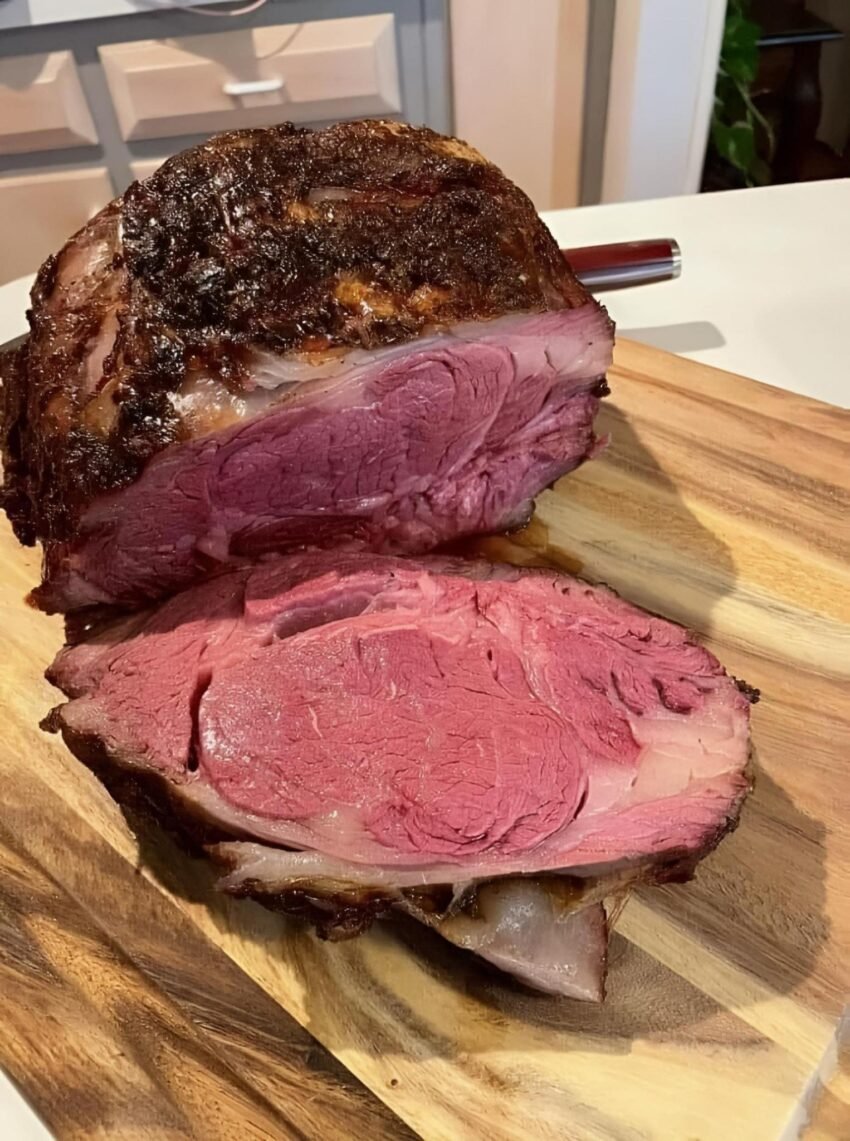
Here’s a detailed, step-by-step guide for making a perfectly juicy and flavorful prime rib roast. I’ll include tips for seasoning, cooking, and resting to get that restaurant-quality result.
Ingredients
-
Prime rib roast (also called standing rib roast), 4–6 lbs (serves 6–8)
-
4–6 cloves garlic, minced
-
2 tbsp kosher salt
-
1 tbsp freshly ground black pepper
-
2 tsp dried rosemary or 2 tbsp fresh, chopped
-
2 tsp dried thyme or 2 tbsp fresh, chopped
-
2 tbsp olive oil
-
Optional: 1–2 tsp paprika or smoked paprika for extra color
-
Optional: 1 cup beef stock or red wine for au jus
Equipment
-
Roasting pan with a rack
-
Meat thermometer (highly recommended)
-
Aluminum foil
Preparation
-
Bring the meat to room temperature:
Take the prime rib out of the fridge 2 hours before cooking. This ensures even cooking. -
Season the roast:
-
Mix garlic, salt, pepper, rosemary, thyme, and olive oil into a paste.
-
Rub the paste generously over the entire roast.
-
Optional: Add paprika for a richer crust.
-
-
Preheat the oven:
Set oven to 450°F (230°C) for the initial sear.
Cooking Instructions
Step 1: High-Heat Sear
-
Place the roast fat-side up on a rack in a roasting pan.
-
Roast at 450°F (230°C) for 15–20 minutes to develop a flavorful crust.
Step 2: Lower Temperature Roast
-
Reduce oven to 325°F (165°C).
-
Continue roasting until the internal temperature reaches:
-
Rare: 120–125°F (49–52°C)
-
Medium-rare: 130–135°F (54–57°C)
-
Medium: 140–145°F (60–63°C)
-
-
Tip: Use a meat thermometer inserted into the thickest part, away from bone.
-
Approximate cooking time: 15–20 minutes per pound at 325°F (165°C).
Step 3: Resting
-
Remove roast from oven and cover loosely with foil.
-
Let it rest 20–30 minutes. The temperature will rise about 5–10°F, and juices will redistribute.
Optional: Make Au Jus
-
Place roasting pan over medium heat on stove.
-
Add 1 cup beef stock or red wine.
-
Scrape pan drippings, simmer 5–10 minutes.
-
Strain and serve alongside sliced prime rib.
Serving
-
Slice the roast against the grain.
-
Serve with au jus, horseradish sauce, roasted vegetables, or mashed potatoes.
Tips for Perfection
-
Dry-aged flavor: If possible, buy dry-aged prime rib for a more intense flavor.
-
Herb variations: Substitute rosemary and thyme with sage or oregano.
-
Crust: Searing at high heat first ensures a golden, flavorful crust.
If you want, I can also give you a “reverse sear” method which produces an even juicier, perfectly medium-rare prime rib every time—it’s my personal favorite.