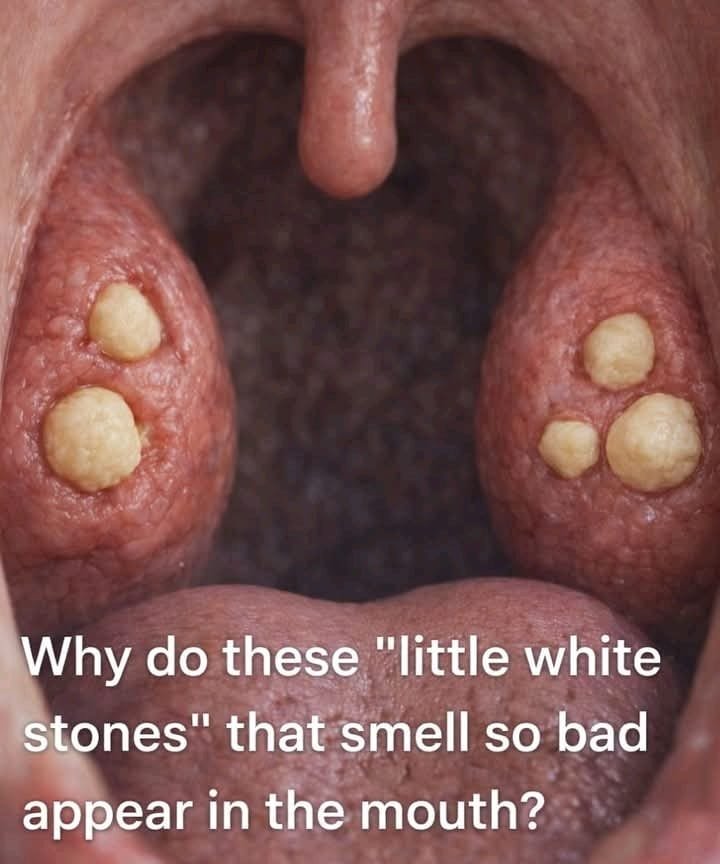
Ah, it sounds like you’re describing tonsil stones, also called tonsilloliths. Here’s a clear breakdown of why they form:
1. Where they come from
-
Tonsil stones form in the tonsillar crypts — small crevices in the tonsils at the back of the throat.
-
These crypts can trap food particles, dead cells, mucus, and bacteria.
2. How they develop
-
The trapped material hardens or calcifies over time, forming small, white or yellowish stones.
-
Bacteria in your mouth feed on this debris and produce sulfur compounds, which give tonsil stones a bad odor.
3. Why they smell
-
The smell is mainly due to volatile sulfur compounds, which are similar to the compounds that cause bad breath.
4. Who gets them
-
People with deep tonsil crypts or a history of tonsil infections are more prone.
-
Poor oral hygiene can contribute, but even healthy mouths can develop them.
5. Symptoms
-
Bad breath
-
Sore throat or irritation
-
Feeling like something is stuck in your throat
6. Prevention and removal
-
Good oral hygiene (brushing, flossing, mouthwash)
-
Gargling with saltwater
-
In stubborn cases, a doctor may remove them or consider tonsil removal if they are frequent.
💡 Fun fact: Some people can have tonsil stones without even knowing, because the stones are tiny and don’t always cause symptoms.
If you want, I can also explain how to safely remove them at home without hurting your tonsils. Do you want me to?