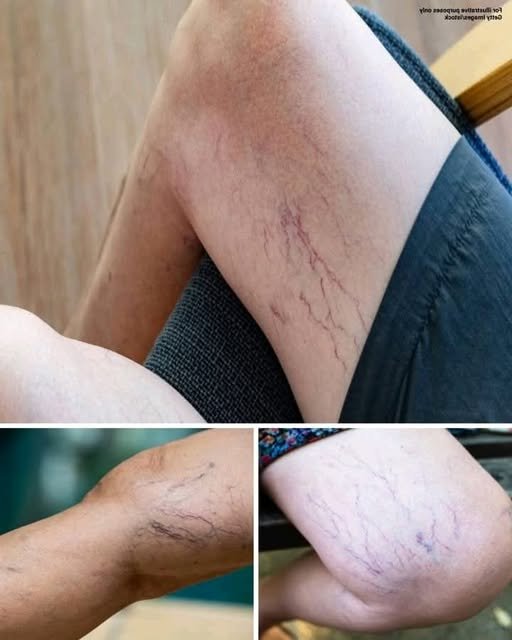
Purple veins on your legs are usually a sign of varicose veins or venous insufficiency, but it’s important to break this down carefully. I’ll explain the causes, symptoms, risks, and when to see a doctor.
1. What Causes Purple Veins on Legs
-
Varicose Veins
-
These are swollen, twisted veins that appear dark purple or blue.
-
They occur when the valves inside the veins fail, causing blood to pool instead of flowing back to the heart.
-
-
Spider Veins
-
Smaller, more superficial veins, often purple or red, sometimes branching like a web.
-
Usually cosmetic, but can indicate underlying vein issues.
-
-
Venous Insufficiency
-
Chronic condition where leg veins have trouble sending blood back to the heart.
-
Can cause purple veins, swelling, heaviness, and sometimes pain.
-
-
Genetic Factors
-
Family history increases risk.
-
Weak vein walls or faulty valves can be inherited.
-
-
Other Contributing Factors
-
Aging (veins lose elasticity)
-
Hormonal changes (pregnancy, menopause, birth control)
-
Obesity or prolonged standing/sitting
-
Injury or trauma to the leg veins
-
2. Symptoms That May Accompany Purple Veins
-
Aching, heavy, or throbbing legs
-
Swelling in ankles or feet
-
Itching around the vein
-
Skin discoloration or ulceration in severe cases
-
Cramping, especially at night
3. Potential Risks
Most purple veins are not immediately dangerous, but untreated severe varicose veins or chronic venous insufficiency can lead to:
-
Blood clots (deep vein thrombosis)
-
Skin ulcers
-
Bleeding from the veins
4. What You Can Do
Lifestyle changes:
-
Exercise regularly to improve blood flow
-
Elevate legs when resting
-
Wear compression stockings
-
Maintain healthy weight
-
Avoid prolonged standing or sitting
Medical treatments:
-
Sclerotherapy – injection to close small veins
-
Laser therapy – for superficial veins
-
Vein stripping or ablation – for larger varicose veins
-
Medications – sometimes to reduce swelling or improve circulation
5. When to See a Doctor
-
Sudden swelling, redness, or pain (possible clot)
-
Skin sores or ulceration near the vein
-
Veins getting larger rapidly
-
If discomfort affects daily life
💡 Key Takeaway: Purple veins on your legs are most often varicose veins caused by weakened vein walls and faulty valves. They are usually more of a cosmetic and comfort issue, but can sometimes signal a more serious circulatory problem. Early lifestyle changes and medical care can prevent complications.
If you want, I can also explain why they appear purple specifically, which is a question a lot of people have—it’s a mix of blood color and vein depth under the skin. Do you want me to go into that?