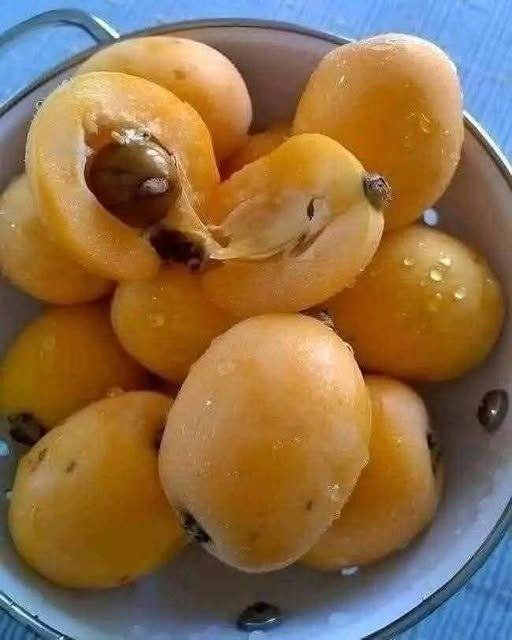
Loquat is a subtropical evergreen fruit tree belonging to the rose family (Rosaceae). It is widely grown for its sweet, juicy fruits and ornamental value.
🌍 Origin & Distribution
-
Native to southeastern China
-
Widely cultivated in:
-
China
-
Japan
-
India
-
Pakistan
-
Spain
-
Turkey
-
United States (especially California & Florida)
-
Mediterranean and subtropical regions worldwide
-
🌳 Plant Description
-
Scientific name: Eriobotrya japonica
-
Family: Rosaceae
-
Height: 5–10 meters
-
Leaves: Large, dark green, leathery, 10–25 cm long
-
Flowers: Small, white, fragrant; bloom in autumn or early winter
-
Fruit:
-
Round or pear-shaped
-
Yellow to orange when ripe
-
Contains 1–5 large brown seeds
-
Sweet to mildly acidic taste
-
🥭 Nutritional Value (per 100 g approx.)
-
Calories: ~47 kcal
-
Carbohydrates: 12 g
-
Fiber: 1.7 g
-
Vitamin A: High
-
Vitamin C: Moderate
-
Potassium: Good source
-
Contains antioxidants (carotenoids, flavonoids)
💊 Health Benefits
1️⃣ Boosts Immunity
Rich in Vitamin C and antioxidants that help fight infections.
2️⃣ Good for Eye Health
High Vitamin A supports vision and eye protection.
3️⃣ Improves Digestion
Contains dietary fiber that aids digestion and prevents constipation.
4️⃣ Supports Heart Health
Potassium helps regulate blood pressure.
5️⃣ Helps in Weight Management
Low calorie and high fiber fruit keeps you full longer.
6️⃣ Anti-inflammatory Properties
Loquat leaves are used in traditional medicine for reducing inflammation.
🌿 Medicinal Uses
-
Leaves used in herbal teas for:
-
Cough
-
Sore throat
-
Bronchitis
-
-
In traditional Chinese and Japanese medicine, loquat leaf extracts are used for respiratory conditions.
🍽 Uses
-
Eaten fresh
-
Used in:
-
Jams
-
Jellies
-
Juices
-
Desserts
-
Wine
-
-
Leaves used for herbal tea
⚠️ Precautions
-
Seeds contain small amounts of cyanogenic compounds (should not be eaten).
-
People with allergies to Rosaceae fruits should be cautious.
If you want, I can also explain:
-
How to grow loquat 🌱
-
Side effects in detail ⚠️
-
Loquat leaf tea benefits 🍵
-
Or comparison with mango/orange 🍊